
Spiritual Aspects of Transgenderism and Christianity

One of the many hot-button topics that is affecting our culture today is the idea that one’s gender may or may not depend on one’s physical expression of the genetic gender of that individual. For example, a person may be genetically and biologically male, but feel like his gender identity, who he really is on the inside, is that of a female. Thus, he/she questions which gender should be expressed. To express his male outside would seem to force him to attempt to express his male nature by practicing social norms that other males exhibit. However, inside “he” feels like this is an act. He is not being true to herself, because she really feels like a female. Which gender should be accepted?

Photo by Tim Mossholder on Pexels.com

Thus we have a faint introduction into transgenderism. While it seems like such a straight-forward issue for many, it is a real struggle for some. Despite many people using this issue to draw attention to themselves and seek a popularity that they may not otherwise have had without identifying as transgender, I do believe it is a legitimate issue for some. Therefore, I wish to discuss it here in depth to help those who are truly seeking to find themselves. I anticipate that I will offend both sides of the argument, but I seek to understand the truth, not merely take a side.

What Does It Mean to Be Transgender?

This is a question for the ages and it depends on who you ask and who you talk to within this group/movement of people. For some it is simply that one believes they are truly the opposite sex than what is expressed genetically/physically. For others their sexuality is more “fluid” or rather their gender/sexuality is beyond defining by mere male or female, hence the trans in “transgender.” Back in 2014, Russell Goldman of ABC posted an article listing 58 of the possible genders one could choose for their Facebook profile. I don’t currently have a Facebook account myself, but I’m sure that number has increased since then.

In a Times special edition entitled The Science of Gender, Katy Steinmetz wrote the article “Infinite Identities,” in which she had interviewed different young people who are within this movement. She explains that even those who are within the movement have trouble keeping up with what certain labels mean. Here she quotes Nick Teich, a transgender man who started the first summer camp for transgender youth in America in 2009:

“We have a growing number of kids who identify as genderqueer, nonbinary, gender-variant. People put ‘demigirl,’ ‘genderless,’ ‘no gender,’ ‘all genders,’ ‘pangender.’ We get things all the time, and I’m like, ‘What is this? I have to look this up.’ “

Since Transgenderism is so hard to define, I believe that for me to attempt to do so here would do a disservice to those involved. Perhaps a better question would be to ask: “Is it invalid to classify a person based on their biological sex?”

Yet, even that has its complications, as I will discuss further when I cover genetic abnormalities of the sex chromosomes. Today, however, I wanted to discuss more along the spiritual aspects of Transgenderism and how it relates to Christianity if at all.

Who Am I on the Inside?

This seems to be the question at the core of Transgenderism as if one’s “inside” doesn’t match the outside, then there is a feeling that in order to be genuine and real, one must take up the attempt at making the outside match the inside. But, where does this “inside” reside? If genetically and physically a person is a male, but feels on the inside that he is really a female, what is meant by “inside”?

Once we have gone beyond the physical and genetic realms of being, we approach the realms of the mind, soul, and spirit, which for the sake of argument will blend together as a “soul” issue. In this sense, Transgenderism can at its initial phase seem more spiritual than Christianity, because it is the attempt at making the natural fit the supernatural.

But, that begs the question as to whether a soul has a gender/sex identification with it at all. Some religions (even facets of Christianity) promote heaven as a place where all your sensual desires will be met. However, this may not be the case if in fact the soul/spirit has no gender at all. Let’s see what the Bible has to say about this.

A Gendered Soul?

A group of Jews called the Sadducees posed a question to Jesus about marriage and the resurrection. According to their customs if a man was married and had a brother and the man died, then his brother would marry the widow to continue his brother’s line. The question was: if a man had seven brothers and each died in his turn and married the same woman, whose wife would she be at the resurrection?

Jesus answered by saying that they didn’t know the scriptures or the power of God. “At the resurrection they neither marry nor are given in marriage but are like the angels in heaven” (Matt 22:30 NABRE), he said.

“Well,” you might say, “there may not be marriage in heaven, but open sexual intercourse may be allowed.”

While I hate to disappoint you (and perhaps myself) in this matter, I believe that God equates marriage and sex. For there are laws in the Old Testament regarding sex and marriage. Namely if a man seduces a virgin, he must pay the bride price and make her his wife. If there is a refusal to marry by one party or the other, he must still pay the bride price (Exodus 22: 15-17). While this is similar to our system of child support, it seems to me that by establishing this law for the Jews God made sex equal to marriage. This is a concept that may be foreign to our modern ears as there have been major strides in our culture to separate sex and marriage as two distinct things, especially since the 1960s.

Regardless, sex and marriage are part of our physical experience. If indeed our souls, our spiritual selves, are like the angels and the angels are genderless, then it would follow that our souls, too are genderless.

This seems to work as this is how we are all equal in God’s sight, despite the fact that we all have different heritages, sizes, strengths and weaknesses and even different genders in our physical selves.

“There is neither Jew nor Greek, there is neither slave nor free person, there is not male and female; for you are all one in Christ Jesus” (Galatians 3:28).

Physical Descriptions Are Valid, But Limited

Back to my original question: “Is it invalid to classify a person based on their biological sex?”

The answer, I believe, is “no.” If our souls are not gendered then it is perfectly valid to classify ourselves as male or female in the physical sense. We are only describing our physical bodies.

However, sex/gender isn’t the only thing that defines us, nor is our worth/value merely limited to the physical aspects of ourselves. Our soul has an infinitude of depth to it that cannot be completely defined by physical definitions. I blame our over sexual culture for instigating the idea that we can somehow define ourselves with sex and gender. We are simply not limited to this.

We are so much more.

However, we should not be surprised that people are acting “lost” as they try to define themselves. The only way to be found is to go to Jesus and accept him as savior.

The only definition you will need to know then is that you will have become God’s child. The rest (male, female, cis-male, a-gendered, all-gendered, … whatever) doesn’t really matter as much.
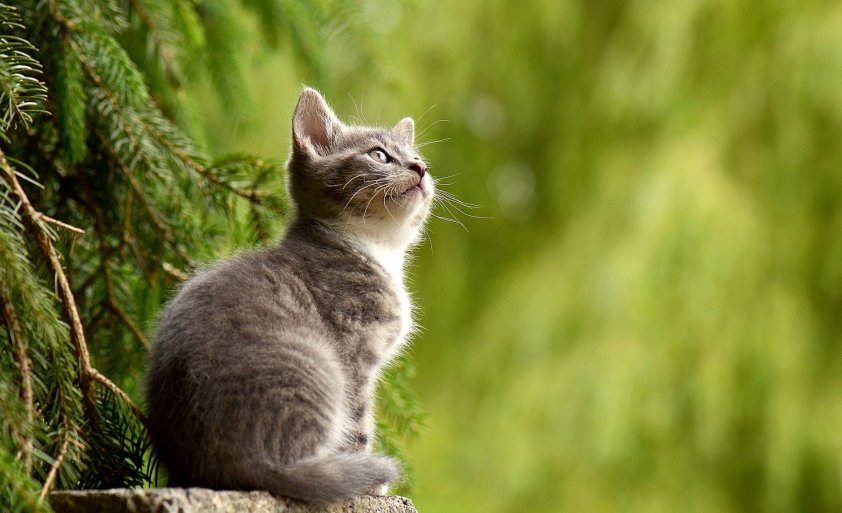
Do Animals Need Redemption?

In my last post, I discussed the idea of animals having souls, why many pastors avoid the question and what the Interlinear Bible had to say about the creation account; the similarity in wording at animal creation to that of mankind’s creation. My conclusion to the question “Do animals have souls?” was a simple “yes,” but it left us with more questions to consider. I will attempt to answer three of these in this post:

  • Are animals considered “fallen” as man is, and if so, do they need redemption?
  • If there is a heaven for animals how do they get there? 
  • Is there a hell for animals or do “all dogs go to heaven”?

Do Animals Share in the Fallen State of Man?

19For creation awaits with eager expectation the revelation of the children of God; 20for creation was made subject to futility, not of its own accord but because of the one who subjected it, in hope 21that creation itself would be set free from slavery to corruption and share in the glorious freedom of the children of God. 22We know that all creation is groaning in labor pains even until now; 23and not only that, but we ourselves, who have the firstfruits of the Spirit, we also groan within ourselves as we wait for adoption, the redemption of our bodies. 24For in hope we were saved. Now hope that sees for itself is not hope. For who hopes for what one sees? 25But if we hope for what we do not see, we wait with endurance.”  – Romans 8:19-25 (NAB)

The Apostle Paul was writing to the Roman Christians about the new life of the Spirit and how the Spirit, living in us after believing in Christ and acting on that faith, is in conflict with our sinful, “fallen,” nature. Jesus was raised from the dead by the power of the Holy Spirit. Now that the Spirit dwells in us, we too have the power to no longer be slaves to our old sinful and harmful ways (Rom 8:2). In the verses quoted above he says that all of creation has been subjected to the effects of sin and is awaiting not only the resurrection of believers in Christ, but also its own redemption. This includes animals. 

Paul says that creation “was made subject to futility, not of its own accord but because of the one who subjected it.” This is a reference to Adam and the consequence of his disobedience recorded in Genesis 3:17-19:

“Cursed is the ground because of you! In toil you shall eat its yield all the days of your life. 18Thorns and thistles it shall bear for you and you shall eat the grass of the field. 19By the sweat of your brow you shall eat bread, until you return to the ground from which you were taken; for you are dust and to dust you shall return.”

Paul explains earlier in Romans (Chapter 5) that because of Adam’s sin, all of mankind has been subjected to death. However, through Christ, all those who accept him are made right with God through him and are promised new life. Creation, too, then was subjected to death and disease because of Adam’s sin, but now has the ability to be renewed through Christ’s atoning sacrifice and resurrection as well. Because mankind originally was made to be the rulers and authorities of this world, the disobedience of our ancestors caused us to lose our place as rulers. Thus, for millennia, creation was subjected to a different set of rulers, Satan and his angels (see Ephesians 6:12), with whom we now struggle against in Christ. But, Christ has taken back this authority. “In the world you will have trouble, but take courage, I have conquered the world.” (John 16:33). Jesus Christ has redeemed the whole world. Thus, there is no need for a messiah for the dogs, one for the cats, one for the chickens, etc. Since everything was made through him (John 1), all of creation, including animals, are being redeemed through him. 

Is There a Heaven and Hell for Animals?

From the pulpit, we get a very simplified vision of redemption and what Christians have to look forward to. Many times the new creation is not even mentioned as being part of our resurrection story, and it really should be. Heaven and Hell can be quite simply explained while the reality may be more complex and thus not quite understood. It can be difficult to go into depth on the subject when a preacher only has so much time to dedicate to it. More of an effort can be made though to understand why heaven is really a place men should want to be and hell a place we want to avoid.

I believe there are many myths about heaven and hell that are implied by this over-simplicity, a subject for another time. But for example, is heaven an actual place, a reference to outer space, or the presence of God? And, is Hell the same thing as Sheol, or Hades, or is it the prison of eternal punishment, the Tartarus mentioned in 2 Peter 2:4? My point is that if we cannot completely grasp the concepts of heaven and hell for ourselves, how then can we understand the spiritual fate of animals? If we are not to be in judgement of other men’s souls in this life, how then can we act as judges of the souls of animals? I believe it is best in both cases to leave the judgement of the spirit and soul to God and entrust him with such matters. However, we do get a few glimpses that God does have a moral standard for the animals and that they too will share in the new creation.

Animals Were Used to Get Right With God

The entire Old Testament is based on the idea of using sacrificial animals to get right with God. From the first clothing of mankind (Gen 3:21) and Abel’s burning of the fat portions of his flocks (Gen 4:4) to God through Moses giving instructions in Exodus, Leviticus and Deuteronomy on which animals are to be sacrificed for which sins and impurities, we see that animals play an important spiritual role in covering mankind’s sins. Usually the animals must be without blemish or stain, signifying that innocent life must atone for spiritual shame. In several places in the Old Testament, God criticizes those who do not bring their best animals to sacrifice. Later, God expresses his frustration of the sacrificial system through the prophets that humanity had focused more on the actions of the sacrifice and forsaken the moral goals of the law (Micah 6:6-8), a concept that was echoed by Jesus (Matt 23:23) and the writer of Hebrews (Heb 10:5). Ultimately, the blood of animals could not fully cover the sin of humanity, because for every sin, there had to be more animal blood spilt. Christ came as a human sacrifice to bear the sins of the whole world. There is now no more need for animals to be sacrificed for human sins (Heb 10:1-18).

Animals Were Expected to Respect Man

Originally, all creatures in the world were given the freedom to eat plants (Gen 1:29), not each other. So the reason Abel slaughtered his sheep and offered the fat portions to God was probably not for food, but for the clothing of man’s nakedness, a result of the fall (Gen 3:10, 21). This may have been part of why Abel’s sacrifice was more appealing to God than Cain’s, although the reason for God’s favor is not directly given. This is only a partial supposition on my part. However, corruption of man continued and perhaps because of man’s ferociousness and disregard for sanctity of life, the animals learned to behave this way too. Perhaps they were even bred to be more ferocious by men as there seemed to be bloodshed and great wickedness occurring all over the world in the time before the flood (Gen 6). God foretold that the earth would produce thorns and thistles as man learned how to farm and breed plants that would produce edible fruit (Gen 3:18). This may have also applied to animals as man desired how to breed certain traits to benefit themselves. Not knowing how to accomplish this, it may have led to the corruption of all flesh mentioned in Genesis 6:12. In the same chapter and in Chapter 7, God distinguishes between clean and unclean animals that are to be on the ark, perhaps a distinction between those with less genetic corruption and those with more.

After the flood, however, God said he would change the animals’ attitude toward humanity as he allowed mankind to use them for food (Gen 9). Furthermore, he would demand an accounting of human blood shed by animals and fellow men alike (v. 5-6). Thus, we see that God holds even the animals to a certain moral code. Even if this be the only law to which he holds the animals accountable, it shows that they too have a moral conscience, however limited, offering further proof that they have a soul of some sort.

Animals Are a “Different Seed”

As to the fate of animals souls and how they are acquitted or condemned, I leave for God, their creator and ours, to decide. Not much is given or described for the spiritual life of the animal and perhaps this is because we are to focus on our own spiritual path to God. However, a good description of all creation’s resurrection can be found in 1 Corinthians 15: 35-57:

35But someone may say, ‘How are the dead raised? With what kind of body will they come back?’ 36You fool! What you sow is not brought to life unless it dies. 37And what you sow is not the body that is to be but a bare kernel of wheat, perhaps, or of some other kind; 38but God gives it a body as he chooses, and to each of the seeds its own body. 39Not all flesh is the same, but there is one kind for human beings, another kind of flesh for animals, another kind of flesh for birds, and another for fish. 40There are both heavenly bodies and earthly bodies, but the brightness of the heavenly is one kind and that of the earthly another. 41The brightness of the sun is one kind, the brightness of the moon another, and the brightness of the stars another. For star differs from star in brightness.

42So also is the resurrection of the dead. It is sown corruptible; it is raised incorruptible. 43It is sown dishonorable; it is raised glorious. It is sown weak; it is raised powerful. 44It is sown a natural body; it is raised a spiritual body. If there is a natural body, there is also a spiritual one.

45So, too, it is written, ‘The first man, Adam, became a living being,’ [Gen 2:7] the last Adam a life-giving spirit. 46But the spiritual was not first; rather the natural and then the spiritual. 47The first man was from the earth, earthly; the second man, from heaven. 48As was the earthly one, so also are the earthly, and as is the heavenly one, so also are the heavenly. 49Just as we have borne the image of the earthly one, we shall also bear the image of the heavenly one.

50This I declare, brothers: flesh and blood cannot inherit the kingdom of God, nor does corruption inherit incorruption. 51Behold, I tell you a mystery. We shall not all fall asleep, but we will all be changed, 52in an instant, in the blink of an eye, at the last trumpet. For the trumpet will sound, the dead will be raised incorruptible, and we shall be changed. 53For that which is corruptible must clothe itself with incorruptibility, and that which is mortal must clothe itself with immortality. 54And when this which is corruptible clothes itself with incorruptibility and this which is mortal clothes itself with immortality, then the word that is written shall come about: ‘Death is swallowed up in victory. 55Where, O death is your victory? Where, O death, is your sting?’ [Hos 13:14]

56The sting of death is sin, and the power of sin is the law. 57But thanks be to God who gives us the victory through our Lord Jesus Christ.”1 Corinthians 15: 35-57

Fire to Prepare for New Growth

10But the day of the Lord will come like a thief, and the heavens will pass away with a mighty roar and the elements will be dissolved by fire, and the earth and everything done on it will be found out. 11Since everything is to be dissolved in this way, what sort of person ought [you] to be, conducting yourselves in holiness and devotion, 12waiting for and hastening the coming of the day of God, because of which the heavens will be dissolved in flames and the elements melted by fire. 13But according to his promise we await new heavens and a new earth in which righteousness dwells.”1 Peter 3:10-13

This spiritual and physical fire will consume all, but like a volcanic eruption or a forest fire, the blaze that consumes the old life provides fertile ground for new. If the physical world works in this way, how much more the spiritual world! Paul’s resurrection analogy of the seeds can apply here too. For this fallen physical world will finally die, but that will provide a way for a new heaven and a new earth to be established where the old once stood. This is all by the work of God through the redemptive power of Christ. 

Thus, the more we study about animal souls, the more we realize the need for the redemption of our own. For Christ died to bring mankind and all creation back to God. So the question then becomes: are you going to be part of the new creation? Are you trusting in Christ for the redemption of your own soul with the hope that you will become right with God and share in the new heaven and new earth? Or, will you continue to be part of the old world, the old life that is consumed without hope of new life? Perhaps even our beloved animals sit and ponder and hope that their masters will trust in Christ and be a part of the new creation as they hope to be. In my first post, I offered that the best option for our animal friends’ souls is to entrust them to God. It turns out that it is the same with our own.

Do Animals Have Souls?

When I was two, my family had a dog named Lady. She was a good dog and very protective of me. She treated me as if I was one of her pups. However, though she served my family for many years, even before I was born, she was hit by a car and severely injured. My dad had to put her down as she was suffering from maggots and infection. It was the first loss I ever experienced. My mother told me that Lady was in a better place and that she went to heaven. In later years I would hear preached from the pulpit that animals don’t have souls and thus just simply cease to exist. Which is true? Do animals have souls or are they simply created beings that cease to exist upon death? Was my mother’s statement just something said to comfort her two-year-old or can there be some truth in it? If I want to be truthful, what do I tell my children when their pets die?

When I have questions like this, I could turn to a pastor or a scientist, both of which may agree or disagree alike. As I already mentioned, I have heard the doctrine of non-souls from a preacher in a message before. However, I have to wonder that if God made mankind to have a soul and we are similarly made, if they too could have a soul. Anyone who has had a dear pet and lost it has pondered this question at some point in their lives. Yet, I hesitate to go to a professional to hear simply another opinion, when I can go to the Bible itself for the truth. But first, let’s visit a few conceptual problems with the existence of souls in animals.

The Problem of Souls in Animals

The concept of animals having souls or spirits is not new. Hinduism, spiritism, animism, and Shintoism clearly state that animals can have spirits, some can even be deities in these faiths. Reincarnation is a belief not shared in all these religions, but worth mentioning as it promotes the idea that human souls could have origins in animals if that human had previously existed as an animal. However, these beliefs do not coincide with what the Bible says. 

I can understand why, then, many Christian pastors steer away from the animal soul idea, because it can lead to worship of created things rather than the One True God, who is the creator of all animals (Genesis 1:20-25). 

With reincarnation, the soul of all things is essentially equal in value as it can be transferred upon death into a new being, either more or less advanced. This contradicts the idea that God made man special in that he made mankind in His image (Genesis 1:27). Reincarnation cannot fit into Christianity as it is clearly stated in the Bible “it is appointed that human beings die once, and after this the judgement” (Hebrews 9:27). 

These answers, while they affirm that animals are not gods and that there is not a connection between animal souls and human souls, it still does not answer the question of whether or not animals have their own soul. To this we return to the Bible and the account of creation to find out how the animals were created and contrast that with the creation of mankind.

Similar Wording at Creation

When I began to look into this, I really wanted to get as close of a translation as possible. Because I also wanted this in other subjects other than just that on animal souls, I purchased an Interlinear Bible, one that has a direct English translation within the Hebrew and Greek texts (hence the name: “interlinear”). This has been very helpful in this study in particular. For in the Interlinear Bible, the word normally translated as “kind” or “being” in the creation of animals is translated as “soul.” Here are a few examples:

“And God said, Let the waters swarm with the swarmers having a soul of life; and let the birds fly over the earth, on the face of the expanse of the heavens. And God created the great sea animals, and all that creeps, having a living soul…” (Genesis 1:20-21, Note: words in italics are not actual translations of words, but are used to indicate the meaning of the original tense of the word using modern English).

“And God said, Let the earth bring forth the soul of life according to its kind: cattle, and creepers, and its beasts of the earth according to its kind. And it was so” (Genesis 1:24).

By comparison, the creation of man in the first chapter does not mention a soul, but that mankind is made in God’s image. However, in Genesis 2, the Interlinear translates as follows:

“And Jehovah God formed the man out of dust from the ground, and blew into his nostrils the breath of life and man became a living soul” (Genesis 2:7).

I am not an expert in Hebrew, but I do notice some differences in the punctuation notation, which could mean that man’s living soul is different from animals. We could argue this even by context alone for from the first chapter, man is set apart as being created in God’s image and is given the authority to rule over the earth. In the second chapter, it is recorded that God blew the breath of life in his nostrils. It is unclear if the “breath of life” is something distinct to man as it is not recorded that God did anything similar with the animals, unless it is assumed that is how all living beings were made living. Regardless, we can conclude that man was set apart to be different from animals in that he was made in God’s image and that he was put in charge of the Earth. My question however is not that man is different from animals, but whether or not animals have a soul at all. Despite man being special, the Interlinear seems to simply state that animals do indeed have souls.

One Conclusion, Yet More Questions

Another point to make here is that while the creation of animals as souls uses very similar wording to that of mankind as souls, there is no mention of souls existing when the rocks and vegetation were created on the third day. Thus, there is not any strong Biblical argument for the existence of souls or spirits in other created things in the creation account in Genesis other than animals and mankind. Thus, religions that have such belief systems cannot have biblical foundations. However, I will concede some questionable references to rocks and trees in other parts of the Bible in this regard. I intend to discuss this topic to go deeper into this in another post. 

Getting back to the point that we have basically concluded that animals do have souls, this opens up many other questions:

  • Are animals considered “fallen” as man is, and if so, do they need redemption?
  • What should our attitude towards animals be?
  • Is it natural for humans to communicate with animals or is demon possession responsible?
  • Does God place moral demands on animals for killing other animals or humans?
  • If there is a heaven for animals how do they get there? Is there a hell for animals or do “all dogs go to heaven”?

It would be unfair if I didn’t answer at least one of my original questions: “How can I comfort my child when they lose a pet?” here in the last part of this post. I will go deeper into this in my next post to answer more of these questions. But for now, since God created the animals’ souls, the best answer I have right now is similar to when trying to comfort loved ones of a deceased person of unknown faith. “They are in God’s hands now.”