
The Other Half of the Gospel

It has become commonplace at least in Western culture to know that Jesus has died for our sins. Some take that seriously and try to change their lives for the better on their own. In so doing they create new rules to keep them from even getting close to wrongdoing or sin. Others take God’s grace for granted and use it as an excuse to sin. These people’s lives look no different than people outside the Church. However, I believe that for many churches and denominations, the people are only being told about one part of the story. 
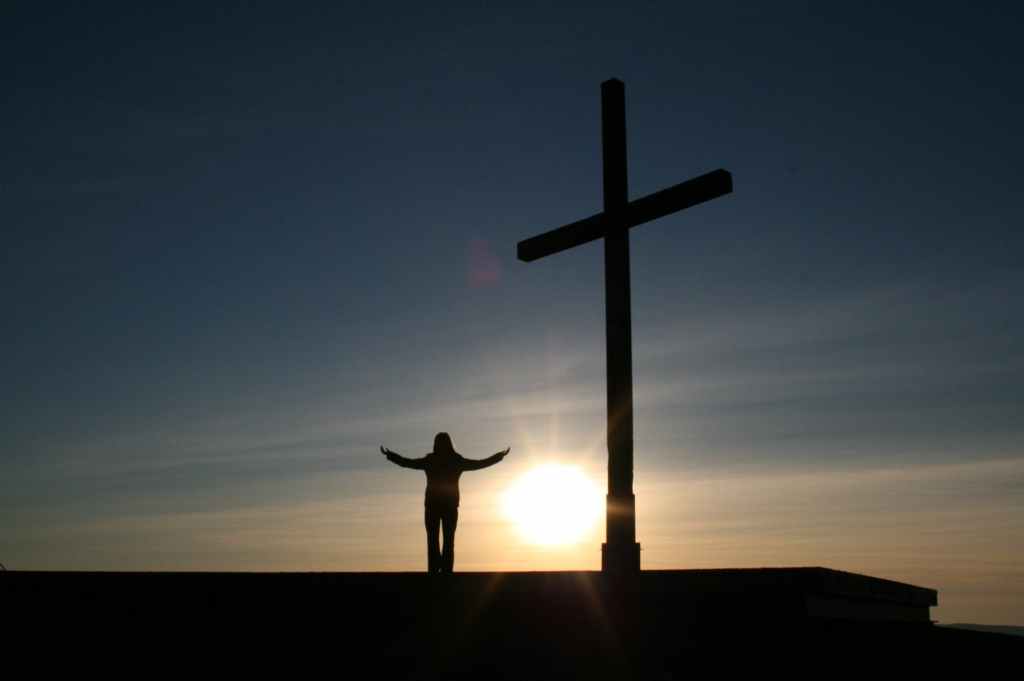
Photo by Pixabay on Pexels.com

16 For God so loved the world that he gave his only Son, so that everyone who believes in him might not perish but might have eternal life.” -John 3:16

However, this is only half of the Gospel. The other half of the Gospel is that Jesus Christ didn’t remain dead; he rose from the grave. His new life is a promise that someday we too will rise from the dead. The interesting thing is that that resurrected life can begin even before we are dead.

The First Half of the Gospel: The Need for a Sin-Taker

The first part of the Gospel is that our sins need to be taken away. In the beginning, God created the world and put humanity in charge of it all (Genesis 1). He then gave humanity a choice: to obey a simple command or give in to curiosity, to gain God’s knowledge through a different route than from God himself. This would in effect give humanity the power to be its own god. This was the choice at the Tree of Knowledge of Good and Evil (Genesis 3). It was a choice that seemed beneficial at the time, but once the fruit was eaten, shame gave way to the realization that they were naked. They tried to clothe themselves to hide their shame, because they knew they had done something wrong.

Through this action sin entered humanity. Innocence was lost. Humanity once depended on God for knowledge of things good and evil, but now mankind had obtained the knowledge itself. It is this knowledge that teaches children to lie to their parents. It is this power that is now in humanity’s genetic code, so to speak, that makes us inherently want to harm others, take advantage of others, have power over our own lives and live in a state of pure ecstasy and pleasure at the expense of our own health and well-being and that of those around us. We feel we ought to be able to make our own rules and live without the consequences of our own decisions.

However, there are always consequences when our choices are made against the way God has designed us; that is against his Law. Before the Law was given, people had to live by faith and to keep order in ancient societies, some civilizations picked up on the natural laws God had originally set up. This is probably why Hamarabi’s code is a lot like the Ten Commandments. God’s nature can be seen in His creation. 

All across the world, different peoples and tribes have come up with ways to atone for their wrongdoings. This was first established when God provided clothing to cover the man and woman’s nakedness, at the sacrifice of an innocent animal (Genesis 3:21). Their children continued this practice of sacrifice, one sacrificing animals (Abel) and the other sacrificing part of his crops (Cain). Each did it to regain God’s favor. One received it because he had purer motives. The other did not receive the favor, because of impure motives. And thus, the first murder occurred over jealousy of God’s favor.

And yet, all ancient peoples, even those who believed in multiple gods and worshiped idols, felt like humanity didn’t measure up. God even revealed this when He gave the Israelites the Law (Exodus 20). God gave them instructions on how to atone for all kinds of different and specific sins..

Yet even those nations who did not know Jehovah God offered all kinds of burnt offerings to appease their own gods. Some societies even recognized that the blood of animals wasn’t enough to cover sin. Even children and people were sacrificed to gain the gods’ favor. Such were the efforts to overcome humanity’s own evil, and yet it was with evil by taking innocent life that it was attempted to overcome this inability to measure up and be blessed by the gods.

God, seeing this, provided his own salvation in the incarnation of Jesus Christ, not just for those who already believed in Him (the Jews), but for all people. He lived a perfect, sinless life. God, in flesh, was able to maintain absolute purity, even though He was tempted just as we were (Matthew 4:1-11; Hebrews 4:15; 1 Peter 2:22).

“He saw that there was no one,

    was appalled that there was none to intervene;

Then his own arm brought about the victory,

    and his justice sustained him.”

            Isaiah 59:16

Although, it would seem to some that Jesus failed in his mission in that he was killed before his ministry could really flourish, that really was his mission. His goal was to take humanity’s place in God’s wrath so that those who believed in him would not spiritually perish, but would have a chance at everlasting life (John 3:16).

16 For God so loved the world that he gave his only Son, so that everyone who believes in him might not perish but might have eternal life. 17 For God did not send his Son into the world to condemn the world, but that the world might be saved through him. 18 Whoever believes in him will not be condemned, but whoever does not believe has already been condemned, because he has not believed in the name of the only Son of God.”  -John 3:16-19 NABRE

It is at the cross where God’s absolute justice and absolute mercy meet. For in many other religions and belief systems, there is no mechanism to take away sin completely as in belief in Jesus. You either have a just god who is going to send everyone to hell anyway, or you have a god who is as sinful as humanity and is completely merciful, overlooking the sin and even promoting or approving of it. For in the ancient days, people had to continue to sacrifice animals to cover over new sins. However, Jesus Christ died, once for all sin in all people, so that the offer of God’s forgiveness could be brought to the whole world.

This is the first half of the Gospel: that total forgiveness of sins is possible. It is a powerful and wonderful thing to be able to present ourselves to God, imperfect as we are and to identify with Jesus to cover over our sins. Yet, Jesus did not remain in the grave. It was on the third day that he rose again from the grave and was witnessed by many, even over 500 people at one time (1 Corinthians 15:6). By his death he brought justification, but by raising to life, he brought sanctification, the ability for the believer to live according to God’s desire and have the hope that, one day, even the believer will be raised to new life, not only spiritually but physically too.

The Second Half of the Gospel: Life Through the Spirit

18 I will not leave you orphans…”

-John 14:18a

Jesus was “25 …was handed over for our transgressions and was raised for our justification”

Romans 4:25

After Jesus died, was resurrected and ascended to heaven, the Holy Spirit was given to those who believed (Acts 1-2). This is a topic that is extremely important as I believe that many are willing to accept Jesus’ death, but fewer still are taught about his resurrection and, furthermore, our own promised resurrection.

Ephesians 1:13-14 states that once someone accepts Christ into their hearts, then they are sealed with the Holy Spirit, “guaranteeing our inheritance” until God redeems all who are His. This verse can be troublesome for those who believe a person can lose their salvation, a topic for another time. My point is that the Holy Spirit is the one who draws a person to Christ and then dwells in the person after he/she has believed and accepted Christ.

The majority of Christians are familiar with how Jesus died for our sins past, present, and future. However, now that we have access to the Spirit, we have God living in us being able to guide us out of our wrongdoing and overcome sin. This is the other half of the Gospel that is often left out or ignored completely in modern day Bible teaching and preaching. 

God has not only given us a way to be forgiven of our sins by the death of Jesus Christ, but He has provided a way for us to be able to live according to His commands by allowing the believer to commune with the Holy Spirit. 

Our fallen nature tells us to fulfill our selfish pleasures, often at the expense of others and our own spiritual and physical health. The Holy Spirit, on the other hand, gives us the desire to change and to want to do things for the right reasons. As we continue to allow the Spirit to work in our lives, we find ourselves wanting to do less and less evil and more and more good instead (read Romans 6-8 for more about this).

The Holy Spirit enables us to do good works, not out of a blind obligation to some written code (such as the Old Testament Law), but out of a desire to do what is right. In fact the Bible says that if you are led by the Spirit, you are not under the law (Galatians 5:18-22). The reason for this is that the results (the fruit) of living by the Spirit are “love, joy, peace, patience, kindness, goodness, faithfulness, gentleness and self-control.” There is no law against such things, because such things fulfill the law by their very nature.

For example, the speed limit in a certain part of the city is 25 mph. The city normally makes this type of law not to aggravate those who wish to go faster, but to protect that area from faster vehicles. There could be a residential area, a school, or lots of other vehicles loading and unloading which require drivers to pay more attention in this area. Thus, the law is created to protect people because not everyone thinks about other people. Usually when a person sees the speed limit, he is only thinking about the speed limit itself, not about the intent.

In contrast, life by the Holy Spirit bypasses the written law and gives the believer extra awareness outside of himself. If everyone had the Holy Spirit in their lives we would not have to have speed limit laws, because everyone would be thinking “Hey the school is nearby, there may be children walking, I need to slow down,” instead of thinking “Oh man, I’ve got to slow down and now I’m going to be late for my appointment!”

In another example, I myself have struggled with a certain sin in the past and have been working through this with God recently to overcome it. In the past I have wanted to overcome it because I knew it was wrong, but in my heart, I still really wanted to do it. However, I am blessed to know that the Holy Spirit is working in me now, because last week I realized that instead of wanting to want to overcome it, I actually now do truly want to overcome it for my own sake. 

In this way the believer is being redeemed from the inside out. Once a person truly accepts Christ, his/her sins are forgiven and sanctification begins. When a person becomes a Christian, they don’t have to wait until they die to be resurrected, their resurrection has already begun and their heavenly life begins at conversion. 

9 But you are not in the flesh; on the contrary, you are in the spirit, if only the Spirit of God dwells in you. Whoever does not have the Spirit of Christ does not belong to him. 10 But if Christ is in you, although the body is dead because of sin, the spirit is alive because of righteousness. 11 If the Spirit of the one who raised Jesus from the dead dwells in you, the one who raised Christ from the dead will give life to your mortal bodies also, through his Spirit that dwells in you.”

                            -Romans 8:9-11 (NABRE)

Or, as C.S. Lewis has said: “Death is working itself backwards.”

Do Animals Need Redemption?

In my last post, I discussed the idea of animals having souls, why many pastors avoid the question and what the Interlinear Bible had to say about the creation account; the similarity in wording at animal creation to that of mankind’s creation. My conclusion to the question “Do animals have souls?” was a simple “yes,” but it left us with more questions to consider. I will attempt to answer three of these in this post:

  • Are animals considered “fallen” as man is, and if so, do they need redemption?
  • If there is a heaven for animals how do they get there? 
  • Is there a hell for animals or do “all dogs go to heaven”?

Do Animals Share in the Fallen State of Man?

19For creation awaits with eager expectation the revelation of the children of God; 20for creation was made subject to futility, not of its own accord but because of the one who subjected it, in hope 21that creation itself would be set free from slavery to corruption and share in the glorious freedom of the children of God. 22We know that all creation is groaning in labor pains even until now; 23and not only that, but we ourselves, who have the firstfruits of the Spirit, we also groan within ourselves as we wait for adoption, the redemption of our bodies. 24For in hope we were saved. Now hope that sees for itself is not hope. For who hopes for what one sees? 25But if we hope for what we do not see, we wait with endurance.”  – Romans 8:19-25 (NAB)

The Apostle Paul was writing to the Roman Christians about the new life of the Spirit and how the Spirit, living in us after believing in Christ and acting on that faith, is in conflict with our sinful, “fallen,” nature. Jesus was raised from the dead by the power of the Holy Spirit. Now that the Spirit dwells in us, we too have the power to no longer be slaves to our old sinful and harmful ways (Rom 8:2). In the verses quoted above he says that all of creation has been subjected to the effects of sin and is awaiting not only the resurrection of believers in Christ, but also its own redemption. This includes animals. 

Paul says that creation “was made subject to futility, not of its own accord but because of the one who subjected it.” This is a reference to Adam and the consequence of his disobedience recorded in Genesis 3:17-19:

“Cursed is the ground because of you! In toil you shall eat its yield all the days of your life. 18Thorns and thistles it shall bear for you and you shall eat the grass of the field. 19By the sweat of your brow you shall eat bread, until you return to the ground from which you were taken; for you are dust and to dust you shall return.”

Paul explains earlier in Romans (Chapter 5) that because of Adam’s sin, all of mankind has been subjected to death. However, through Christ, all those who accept him are made right with God through him and are promised new life. Creation, too, then was subjected to death and disease because of Adam’s sin, but now has the ability to be renewed through Christ’s atoning sacrifice and resurrection as well. Because mankind originally was made to be the rulers and authorities of this world, the disobedience of our ancestors caused us to lose our place as rulers. Thus, for millennia, creation was subjected to a different set of rulers, Satan and his angels (see Ephesians 6:12), with whom we now struggle against in Christ. But, Christ has taken back this authority. “In the world you will have trouble, but take courage, I have conquered the world.” (John 16:33). Jesus Christ has redeemed the whole world. Thus, there is no need for a messiah for the dogs, one for the cats, one for the chickens, etc. Since everything was made through him (John 1), all of creation, including animals, are being redeemed through him. 

Is There a Heaven and Hell for Animals?

From the pulpit, we get a very simplified vision of redemption and what Christians have to look forward to. Many times the new creation is not even mentioned as being part of our resurrection story, and it really should be. Heaven and Hell can be quite simply explained while the reality may be more complex and thus not quite understood. It can be difficult to go into depth on the subject when a preacher only has so much time to dedicate to it. More of an effort can be made though to understand why heaven is really a place men should want to be and hell a place we want to avoid.

I believe there are many myths about heaven and hell that are implied by this over-simplicity, a subject for another time. But for example, is heaven an actual place, a reference to outer space, or the presence of God? And, is Hell the same thing as Sheol, or Hades, or is it the prison of eternal punishment, the Tartarus mentioned in 2 Peter 2:4? My point is that if we cannot completely grasp the concepts of heaven and hell for ourselves, how then can we understand the spiritual fate of animals? If we are not to be in judgement of other men’s souls in this life, how then can we act as judges of the souls of animals? I believe it is best in both cases to leave the judgement of the spirit and soul to God and entrust him with such matters. However, we do get a few glimpses that God does have a moral standard for the animals and that they too will share in the new creation.

Animals Were Used to Get Right With God

The entire Old Testament is based on the idea of using sacrificial animals to get right with God. From the first clothing of mankind (Gen 3:21) and Abel’s burning of the fat portions of his flocks (Gen 4:4) to God through Moses giving instructions in Exodus, Leviticus and Deuteronomy on which animals are to be sacrificed for which sins and impurities, we see that animals play an important spiritual role in covering mankind’s sins. Usually the animals must be without blemish or stain, signifying that innocent life must atone for spiritual shame. In several places in the Old Testament, God criticizes those who do not bring their best animals to sacrifice. Later, God expresses his frustration of the sacrificial system through the prophets that humanity had focused more on the actions of the sacrifice and forsaken the moral goals of the law (Micah 6:6-8), a concept that was echoed by Jesus (Matt 23:23) and the writer of Hebrews (Heb 10:5). Ultimately, the blood of animals could not fully cover the sin of humanity, because for every sin, there had to be more animal blood spilt. Christ came as a human sacrifice to bear the sins of the whole world. There is now no more need for animals to be sacrificed for human sins (Heb 10:1-18).

Animals Were Expected to Respect Man

Originally, all creatures in the world were given the freedom to eat plants (Gen 1:29), not each other. So the reason Abel slaughtered his sheep and offered the fat portions to God was probably not for food, but for the clothing of man’s nakedness, a result of the fall (Gen 3:10, 21). This may have been part of why Abel’s sacrifice was more appealing to God than Cain’s, although the reason for God’s favor is not directly given. This is only a partial supposition on my part. However, corruption of man continued and perhaps because of man’s ferociousness and disregard for sanctity of life, the animals learned to behave this way too. Perhaps they were even bred to be more ferocious by men as there seemed to be bloodshed and great wickedness occurring all over the world in the time before the flood (Gen 6). God foretold that the earth would produce thorns and thistles as man learned how to farm and breed plants that would produce edible fruit (Gen 3:18). This may have also applied to animals as man desired how to breed certain traits to benefit themselves. Not knowing how to accomplish this, it may have led to the corruption of all flesh mentioned in Genesis 6:12. In the same chapter and in Chapter 7, God distinguishes between clean and unclean animals that are to be on the ark, perhaps a distinction between those with less genetic corruption and those with more.

After the flood, however, God said he would change the animals’ attitude toward humanity as he allowed mankind to use them for food (Gen 9). Furthermore, he would demand an accounting of human blood shed by animals and fellow men alike (v. 5-6). Thus, we see that God holds even the animals to a certain moral code. Even if this be the only law to which he holds the animals accountable, it shows that they too have a moral conscience, however limited, offering further proof that they have a soul of some sort.

Animals Are a “Different Seed”

As to the fate of animals souls and how they are acquitted or condemned, I leave for God, their creator and ours, to decide. Not much is given or described for the spiritual life of the animal and perhaps this is because we are to focus on our own spiritual path to God. However, a good description of all creation’s resurrection can be found in 1 Corinthians 15: 35-57:

35But someone may say, ‘How are the dead raised? With what kind of body will they come back?’ 36You fool! What you sow is not brought to life unless it dies. 37And what you sow is not the body that is to be but a bare kernel of wheat, perhaps, or of some other kind; 38but God gives it a body as he chooses, and to each of the seeds its own body. 39Not all flesh is the same, but there is one kind for human beings, another kind of flesh for animals, another kind of flesh for birds, and another for fish. 40There are both heavenly bodies and earthly bodies, but the brightness of the heavenly is one kind and that of the earthly another. 41The brightness of the sun is one kind, the brightness of the moon another, and the brightness of the stars another. For star differs from star in brightness.

42So also is the resurrection of the dead. It is sown corruptible; it is raised incorruptible. 43It is sown dishonorable; it is raised glorious. It is sown weak; it is raised powerful. 44It is sown a natural body; it is raised a spiritual body. If there is a natural body, there is also a spiritual one.

45So, too, it is written, ‘The first man, Adam, became a living being,’ [Gen 2:7] the last Adam a life-giving spirit. 46But the spiritual was not first; rather the natural and then the spiritual. 47The first man was from the earth, earthly; the second man, from heaven. 48As was the earthly one, so also are the earthly, and as is the heavenly one, so also are the heavenly. 49Just as we have borne the image of the earthly one, we shall also bear the image of the heavenly one.

50This I declare, brothers: flesh and blood cannot inherit the kingdom of God, nor does corruption inherit incorruption. 51Behold, I tell you a mystery. We shall not all fall asleep, but we will all be changed, 52in an instant, in the blink of an eye, at the last trumpet. For the trumpet will sound, the dead will be raised incorruptible, and we shall be changed. 53For that which is corruptible must clothe itself with incorruptibility, and that which is mortal must clothe itself with immortality. 54And when this which is corruptible clothes itself with incorruptibility and this which is mortal clothes itself with immortality, then the word that is written shall come about: ‘Death is swallowed up in victory. 55Where, O death is your victory? Where, O death, is your sting?’ [Hos 13:14]

56The sting of death is sin, and the power of sin is the law. 57But thanks be to God who gives us the victory through our Lord Jesus Christ.”1 Corinthians 15: 35-57

Fire to Prepare for New Growth

10But the day of the Lord will come like a thief, and the heavens will pass away with a mighty roar and the elements will be dissolved by fire, and the earth and everything done on it will be found out. 11Since everything is to be dissolved in this way, what sort of person ought [you] to be, conducting yourselves in holiness and devotion, 12waiting for and hastening the coming of the day of God, because of which the heavens will be dissolved in flames and the elements melted by fire. 13But according to his promise we await new heavens and a new earth in which righteousness dwells.”1 Peter 3:10-13

This spiritual and physical fire will consume all, but like a volcanic eruption or a forest fire, the blaze that consumes the old life provides fertile ground for new. If the physical world works in this way, how much more the spiritual world! Paul’s resurrection analogy of the seeds can apply here too. For this fallen physical world will finally die, but that will provide a way for a new heaven and a new earth to be established where the old once stood. This is all by the work of God through the redemptive power of Christ. 

Thus, the more we study about animal souls, the more we realize the need for the redemption of our own. For Christ died to bring mankind and all creation back to God. So the question then becomes: are you going to be part of the new creation? Are you trusting in Christ for the redemption of your own soul with the hope that you will become right with God and share in the new heaven and new earth? Or, will you continue to be part of the old world, the old life that is consumed without hope of new life? Perhaps even our beloved animals sit and ponder and hope that their masters will trust in Christ and be a part of the new creation as they hope to be. In my first post, I offered that the best option for our animal friends’ souls is to entrust them to God. It turns out that it is the same with our own.